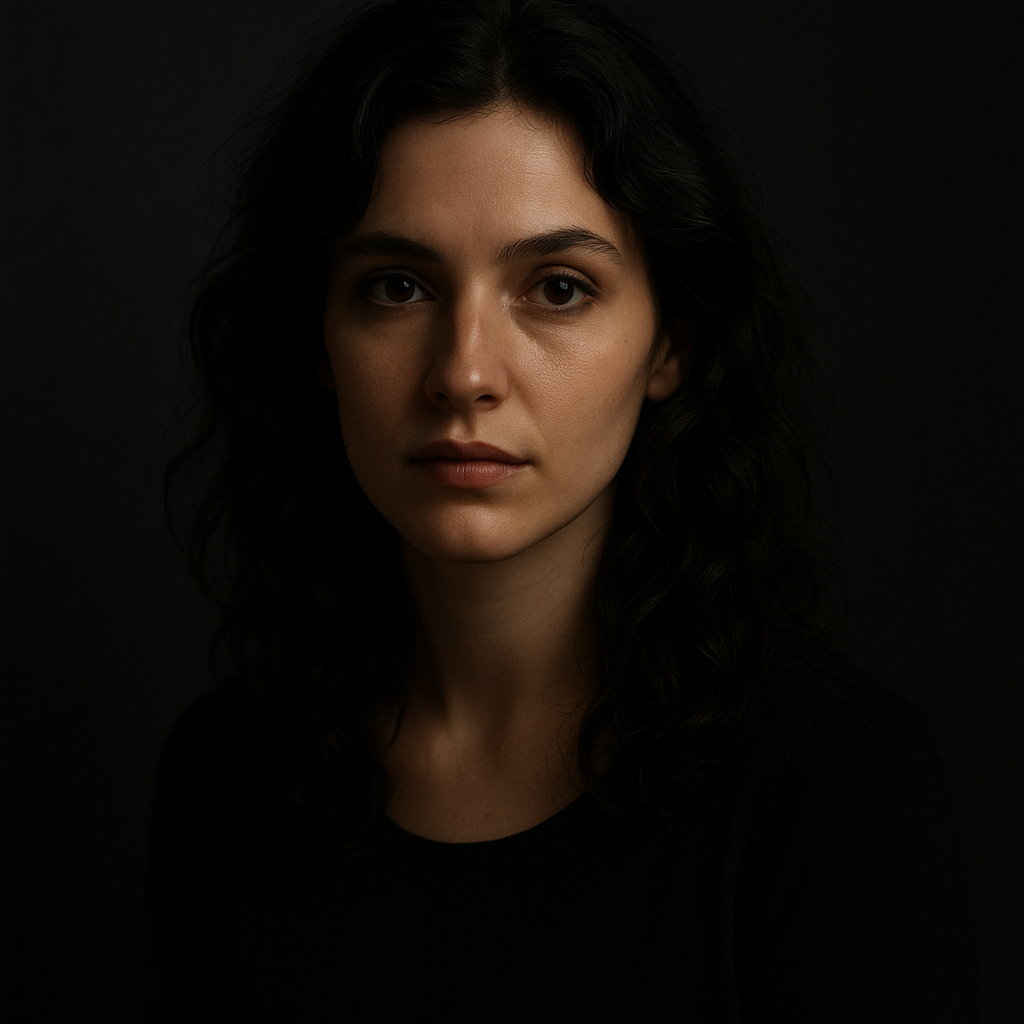
Vesper performing - dark cinematic scene with piano

Vesper

"Iconic movie songs reimagined. This version will make you cry."

The Artist

Vesper artist portrait

Vesper takes the most iconic songs from cinema history, strips them down to their emotional core, then rebuilds them as dark, haunting cinematic experiences. Driven by sparse piano, atmospheric reverb, and a voice that carries the weight of every story these films ever told.

Each cover is a rearrangement, not a replica. Minor keys replace major ones. Silence replaces spectacle. What remains is the raw feeling the original songwriters always intended: amplified, distilled, and delivered in a way that hits differently.

Vesper is an AI music project by Reclaim Media, exploring the intersection of cinematic storytelling and technology-driven artistry.

Watch

My Heart Will Go On (Vesper Version)

From Titanic (1997) · Originally by Celine Dion

I Will Always Love You (Vesper Version)

From The Bodyguard (1992) · Originally by Whitney Houston

Titanic movie scene - Rose and Jack at the bow of the ship
Titanic 1997 🎬 Video Complete

My Heart Will Go On

Originally performed by Celine Dion

The Original Song

Celine Dion almost didn't record it. James Horner, the film's composer, wrote the melody and secretly worked with lyricist Will Jennings to create a demo, knowing that director James Cameron didn't want a pop song anywhere near his epic. Horner played the demo for Cameron once. Cameron said no. Horner played it again. Cameron relented. And the rest became history.

"My Heart Will Go On" went on to win the Academy Award for Best Original Song, sold millions worldwide, and became so closely tied to Titanic that you literally cannot hear the opening tin whistle without seeing Leonardo DiCaprio spreading his arms on the bow of a doomed ship.

The Movie

Titanic (1997) was James Cameron's $200 million gamble that everyone in Hollywood expected to sink. Instead, it became the highest-grossing film of all time, won 11 Academy Awards (tying Ben-Hur's record), and turned Leonardo DiCaprio and Kate Winslet into global icons. The film tells the story of Jack Dawson, a penniless artist, and Rose DeWitt Bukater, a society girl trapped in an engagement she doesn't want. They fall in love aboard the RMS Titanic during its ill-fated maiden voyage in April 1912.

The Scene

The song plays over the closing credits, but its melody weaves through the entire film. Horner's score uses the theme as an emotional anchor, pulling you back to the romance even as the ship breaks apart and sinks into the freezing North Atlantic. By the time the credits roll and Dion's voice fills the theater, most people in the audience are already in tears. The elderly Rose drops the Heart of the Ocean necklace into the sea. The camera drifts through the wreckage back to the grand staircase, where everyone who died is waiting, young again, and Jack is there at the top. The song carries all of that.

Vesper's version strips away the orchestral grandeur entirely. No sweeping strings, no tin whistle. Just a piano in the dark, playing the melody like a music box winding down. The vocals sit lower, quieter, like someone singing this to themselves in an empty room. It turns a power ballad into a lullaby for the lost.

Q: Who originally sang My Heart Will Go On?
Celine Dion recorded "My Heart Will Go On" for the 1997 film Titanic. It was written by composer James Horner with lyrics by Will Jennings. The song won both the Academy Award and the Golden Globe for Best Original Song.
Q: Did James Cameron want My Heart Will Go On in Titanic?
No, Cameron was initially opposed to having a pop song in the film. Composer James Horner created the demo in secret and had to convince Cameron to include it. Cameron eventually agreed after hearing it multiple times.
The Bodyguard movie scene
The Bodyguard 1992 🎬 Video Complete

I Will Always Love You

Originally written by Dolly Parton (1973) · Made iconic by Whitney Houston

The Original Song

Dolly Parton wrote "I Will Always Love You" in 1973 as a farewell to her business partner and mentor Porter Wagoner. It was never a breakup song in the romantic sense. It was about gratitude, about leaving someone you care about because you've outgrown the situation. Parton's original is gentle, almost conversational. Country music in its purest form.

Then Whitney Houston got hold of it. Her version, recorded for the 1992 film The Bodyguard, turned a quiet country farewell into one of the most powerful vocal performances ever captured on tape. The acapella opening. The key change. That sustained note that seems to go on forever. Houston's version became the best-selling single by a female artist in music history, moving over 20 million copies worldwide.

The Movie

The Bodyguard (1992) stars Kevin Costner as Frank Farmer, a former Secret Service agent hired to protect Rachel Marron (Whitney Houston), a pop superstar receiving death threats. The two fall in love despite their best efforts not to. The film was a massive commercial hit, earning over $400 million at the box office, even though critics were divided. Nobody was divided about the soundtrack. It became the best-selling movie soundtrack of all time.

The Scene

The song plays during the final scene at the airport. Frank and Rachel say goodbye. He's leaving. She's staying. There is no happy ending where they run into each other's arms. Instead, Rachel walks toward her plane, then turns back. They share one last kiss. Then Frank watches her go. The acapella opening hits right as the weight of the goodbye sinks in, and by the time Houston reaches the chorus, you understand that loving someone and being with someone are not always the same thing.

Vesper's version begins where Houston's acapella opening ends: in the silence after the last note fades. The piano enters slowly, almost reluctantly. The vocal drops to a near-whisper for the verses, then builds not to power, but to ache. Where Houston proved love is strong, Vesper proves love is heavy.

Q: Who originally wrote I Will Always Love You?
Dolly Parton wrote and originally recorded "I Will Always Love You" in 1973. She wrote it about leaving her mentor and business partner Porter Wagoner. Whitney Houston's iconic cover for The Bodyguard (1992) became the more widely known version.
Q: How many copies did Whitney Houston's version sell?
Whitney Houston's "I Will Always Love You" sold over 20 million copies worldwide, making it the best-selling single by a female artist in history.
Armageddon movie scene
Armageddon 1998 Coming Soon

I Don't Want to Miss a Thing

Originally performed by Aerosmith

The Original Song

Diane Warren wrote "I Don't Want to Miss a Thing" in one sitting. She pictured someone watching the person they love sleeping, so overwhelmed by the feeling that they don't even want to close their eyes. Warren pitched the song for the Armageddon soundtrack, and Aerosmith, whose lead singer Steven Tyler happened to have a daughter (Liv Tyler) starring in the film, took it on.

The result became Aerosmith's first and only number-one single on the Billboard Hot 100. After decades of rock anthems, power ballads, and stadium tours, their biggest chart hit turned out to be a love song written by someone else for a disaster movie. Steven Tyler has said the song makes him think of Liv. That tracks.

The Movie

Armageddon (1998) is Michael Bay at full volume. An asteroid the size of Texas is heading for Earth. NASA's plan? Send a team of deep-core oil drillers into space to land on the asteroid, drill a hole, drop a nuclear bomb, and split it in two. Bruce Willis leads the crew as Harry Stamper. Ben Affleck plays his protege A.J., who is also secretly dating Harry's daughter Grace (Liv Tyler). It's loud, ridiculous, and wildly entertaining.

The Scene

The song plays during the quiet moments between Harry and Grace, particularly in the lead-up to the launch and during the gut-punch ending. Harry makes the choice to stay behind on the asteroid and trigger the bomb manually, sacrificing himself to save the planet and his daughter. His last communication with Grace through the video screen, where he tells her he's not coming home, is one of the most effective tearjerker moments in 90s action cinema. The song catches all of it: the tenderness hiding inside a bombastic action movie.

Vesper pulls the song completely out of the action movie context and places it somewhere quiet and devastating. Stripped of power chords and Steven Tyler's wail, it becomes a meditation on watching someone you love while knowing your time together is running out. The piano carries a weight that no guitar solo ever could.

Q: Who wrote I Don't Want to Miss a Thing?
Diane Warren wrote the song for the 1998 Armageddon soundtrack. Aerosmith performed it, and it became their first and only number-one hit on the Billboard Hot 100.
Q: Is Liv Tyler in the Armageddon music video?
Yes. Liv Tyler, who played Grace Stamper in the film, appears in the music video alongside footage from the movie. Her father Steven Tyler is Aerosmith's lead singer, which made the father-daughter theme in the film especially resonant.
Dirty Dancing movie scene
Dirty Dancing 1987 Coming Soon

(I've Had) The Time of My Life

Originally performed by Bill Medley & Jennifer Warnes

The Original Song

The song was written by Franke Previte, John DeNicola, and Donald Markowitz. Finding the right singers was the hard part. The producers went through multiple options before landing on Bill Medley, one half of The Righteous Brothers, and Jennifer Warnes, already known for "Up Where We Belong" from An Officer and a Gentleman. The pairing worked perfectly. Medley's deep, soulful voice against Warnes' bright clarity created a duet that sounded like falling in love felt.

The song won the Academy Award for Best Original Song and spent a week at number one on the Billboard Hot 100. It has since become the go-to song for wedding first dances, high school proms, and every couple who has ever attempted (and usually failed) the overhead lift.

The Movie

Dirty Dancing (1987) was supposed to be a small movie. Shot on a $5 million budget with a largely unknown cast, it became a cultural phenomenon. Set in the summer of 1963, it follows Frances "Baby" Houseman (Jennifer Grey), a sheltered teenager vacationing at a Catskills resort with her family. She falls for Johnny Castle (Patrick Swayze), a working-class dance instructor whose world is nothing like hers. The film made over $200 million worldwide and launched Swayze into stardom.

The Scene

The final scene. Baby's father has tried to keep them apart. The summer is over. Everyone is at the end-of-season show, and Baby is sitting with her family, deflated. Then Johnny walks back in, says "Nobody puts Baby in a corner," and pulls her onto the stage. What follows is the dance they've been working toward all summer. The crowd joins in. Baby's father finally sees what everyone else already knew. And then comes the lift: Baby runs, jumps, and Swayze holds her overhead like it's nothing. The whole room erupts. The song carries every ounce of that triumph.

Vesper's take flips the entire energy. Instead of a triumphant duet, it becomes a solo reflection. One voice looking back at a summer that changed everything, knowing it can never happen again. The piano plays the melody with the kind of bittersweet restraint that turns celebration into remembrance. It's no longer about the dance. It's about what happens after the music stops.

Q: Who sang Time of My Life in Dirty Dancing?
Bill Medley and Jennifer Warnes performed "(I've Had) The Time of My Life" for the 1987 Dirty Dancing soundtrack. It won the Academy Award for Best Original Song and reached number one on the Billboard Hot 100.
Q: What is the famous lift in Dirty Dancing?
The overhead lift in the final dance scene, where Johnny (Patrick Swayze) lifts Baby (Jennifer Grey) above his head during "(I've Had) The Time of My Life." It has become one of the most replicated and parodied moments in film history.
Ghost movie pottery scene
Ghost 1990 Coming Soon

Unchained Melody

Originally performed by The Righteous Brothers (1965)

The Original Song

"Unchained Melody" has one of the strangest origin stories in popular music. It was written by Alex North and Hy Zaret in 1955 for a little-known prison film called Unchained, about inmates at a minimum-security facility in California. The melody was gorgeous, but the film disappeared. The song survived.

Over the following decade, hundreds of artists recorded it. But the version that stuck was recorded by Bobby Hatfield of The Righteous Brothers in 1965. Hatfield sang it solo because his partner Bill Medley felt the song didn't suit a duet. That recording, with its aching tenor vocal and slow build, became one of the most beloved songs of the 20th century. It's been covered more than 1,500 times.

The Movie

Ghost (1990) stars Patrick Swayze as Sam Wheat, a banker who is murdered during a mugging and becomes a ghost trapped between worlds. Unable to move on, he discovers his murder was arranged by a trusted friend. With the help of a reluctant psychic, Oda Mae Brown (Whoopi Goldberg, who won an Oscar for the role), Sam tries to protect his girlfriend Molly (Demi Moore) and bring his killer to justice. The film earned over $500 million worldwide and became the highest-grossing film of 1990.

The Scene

You already know the scene. The pottery wheel. Sam sits behind Molly at the wheel, their hands covered in wet clay, and "Unchained Melody" plays on a jukebox in their loft apartment. It's become one of the most iconic romantic scenes in film history, parodied endlessly but never truly matched. The song transforms from background music into something that feels like the pulse of the scene itself. And later, after Sam is dead and Oda Mae channels him so he can hold Molly one last time, the melody returns. Only now it means something completely different. The longing in the lyrics was always about separation. In Ghost, that separation becomes literal.

Vesper's version leans into the ghost story. The piano echoes like it's being played in an empty room. The vocal floats, untethered, as if the singer isn't entirely present. Where The Righteous Brothers sang about missing someone, Vesper sings as someone who can't be found. It turns "Unchained Melody" from a love song into a haunting.

Q: What movie is the Unchained Melody pottery scene from?
The iconic pottery wheel scene set to "Unchained Melody" is from the 1990 film Ghost, starring Patrick Swayze and Demi Moore. The Righteous Brothers' 1965 recording plays during the scene.
Q: When was Unchained Melody originally written?
The song was written by Alex North and Hy Zaret in 1955 for the prison film Unchained. The Righteous Brothers' 1965 version is the most famous recording, and its popularity was revived when it was featured in Ghost (1990).
Top Gun movie scene
Top Gun 1986 Coming Soon

Take My Breath Away

Originally performed by Berlin

The Original Song

Giorgio Moroder, the Italian producer who basically invented electronic dance music in the 1970s, wrote "Take My Breath Away" for Top Gun after getting the contract for the film's soundtrack. The band Berlin, fronted by vocalist Terri Nunn, recorded it. The band's name was actually their attempt to sound German, and they'd been begging to work with Moroder for years. When they finally got the chance, they expected to record something minor. Instead, they got one of the defining songs of the 1980s.

The song won the Academy Award for Best Original Song, hit number one on the Billboard Hot 100, and became permanently welded to Top Gun in the cultural memory. Terri Nunn's breathy, synth-drenched vocal defined a certain flavor of 80s romance: glossy, emotional, and just a little too much in the best possible way.

The Movie

Top Gun (1986) is the movie that made Tom Cruise a megastar. He plays Pete "Maverick" Mitchell, a hotshot Navy fighter pilot attending the Top Gun Naval Fighter Weapons School. Between aerial dogfights and competitive ego battles with rival pilot Iceman (Val Kilmer), Maverick pursues Charlie (Kelly McGillis), a civilian astrophysicist and Top Gun instructor. Directed by Tony Scott, the film was a massive hit, grossing over $350 million and triggering a documented surge in Navy recruitment.

The Scene

"Take My Breath Away" plays during the love scenes between Maverick and Charlie. The most memorable is their first night together: the backlit silhouette scene with flowing curtains, filmed through that distinctive Tony Scott blue filter. The synth intro hits, and the entire movie shifts from adrenaline to intimacy. It's pure 80s filmmaking. No subtlety, all atmosphere. And it works.

Vesper strips the 80s synth production entirely and replaces it with nothing but piano and space. The song was always more emotional than people gave it credit for, hidden underneath all that electronic production. Without the synths, the melody reveals itself as something genuinely aching. The vocal trades Nunn's breathy delivery for something rawer, closer, like a confession instead of a performance.

Q: Who produced Take My Breath Away?
Giorgio Moroder produced "Take My Breath Away" for the 1986 Top Gun soundtrack. Berlin, fronted by Terri Nunn, performed the song. It won the Academy Award for Best Original Song.
Q: What band sang Take My Breath Away?
Berlin, an American synth-pop band led by vocalist Terri Nunn, recorded "Take My Breath Away." Despite the band's name, they were from Los Angeles, not Germany.
Wizard of Oz movie scene
The Wizard of Oz 1939 Coming Soon

Somewhere Over the Rainbow

Originally performed by Judy Garland

The Original Song

Harold Arlen composed the melody and Yip Harburg wrote the lyrics. The song almost didn't survive the final cut. MGM executives wanted to remove it, arguing it slowed down the film's opening and that it was "too sophisticated" for a song sung by a girl in a farmyard. They tried to cut it at least three times. Producer Arthur Freed fought to keep it every time.

Judy Garland was 16 years old when she sang it. Her performance is astonishing not because of technical perfection, but because of the yearning in it. A teenager standing in a barnyard, looking up, and wanting something more than what she has. The song won the Academy Award for Best Original Song in 1940 and became Garland's signature piece for the rest of her life. The American Film Institute later ranked it the greatest movie song of all time.

The Movie

The Wizard of Oz (1939) follows Dorothy Gale (Judy Garland), a Kansas farm girl swept away by a tornado to the magical Land of Oz. With her dog Toto, she follows the Yellow Brick Road to the Emerald City, gathering companions along the way: a Scarecrow wanting a brain, a Tin Man wanting a heart, and a Cowardly Lion wanting courage. The film was not a box office smash on its initial release, but television broadcasts starting in the 1950s transformed it into one of the most watched and beloved films in American history.

The Scene

Dorothy is standing in the dusty farmyard of her Kansas home. She's been told to stay out of the way, to not cause trouble. She leans against a haystack, looks up at the sky, and sings about a place she's heard of in a lullaby. It's the simplest setup in film history: a girl, a wish, and a song. No special effects, no spectacle. Just Garland's voice carrying the entire emotional weight of the film's premise. Everything that follows, Oz, the tornado, the ruby slippers, all of it starts here, in this quiet yearning.

Vesper approaches this one with the most restraint of any cover in the collection. The melody is played so slowly it barely moves. The vocal is fragile, almost breaking on the high notes. Where Garland sang with hope, Vesper sings with the knowledge that the place over the rainbow might not exist. It turns a wish into an elegy.

Q: Who originally sang Somewhere Over the Rainbow?
Judy Garland, at age 16, performed "Somewhere Over the Rainbow" in the 1939 film The Wizard of Oz. It was written by Harold Arlen (music) and Yip Harburg (lyrics), and won the Academy Award for Best Original Song.
Q: Was Somewhere Over the Rainbow almost cut from the movie?
Yes. MGM executives tried to cut the song at least three times, arguing it slowed down the opening. Producer Arthur Freed fought to keep it in. The song went on to be ranked by the American Film Institute as the greatest movie song ever written.
A Star Is Born movie scene
A Star Is Born 2018 Coming Soon

Shallow

Originally performed by Lady Gaga & Bradley Cooper

The Original Song

"Shallow" was co-written by Lady Gaga, Mark Ronson, Anthony Rossomando, and Andrew Wyatt. The songwriting process started with the guitar riff. They wanted something that felt raw, like a real song being born in the moment rather than a polished pop production. Gaga has talked about the song coming together quickly, with each writer building on what the others brought. The result is a song that escalates from intimate conversation to full-throated revelation.

It won the Academy Award for Best Original Song, the Grammy for Best Pop Duo/Group Performance, and about a dozen other awards. It spent weeks at the top of charts worldwide. The performance at the 2019 Oscars, where Gaga and Cooper sang together on a piano bench, became one of the most talked-about live performances of the decade.

The Movie

A Star Is Born (2018) is the fourth version of this story, directed by and starring Bradley Cooper as Jackson Maine, a country-rock musician battling addiction. He discovers Ally (Lady Gaga), a talented singer working in a drag bar, and pulls her into the spotlight. As her career takes off, his falls apart. The film earned over $430 million worldwide and established Cooper as a director while proving Gaga could act alongside the best in Hollywood.

The Scene

The scene that changed everything: Jackson brings Ally on stage during one of his concerts. She's terrified. She's never performed in front of a crowd this size. The song starts with Jackson's low, gravelly vocals, and Ally joins tentatively. But when the chorus hits, she lets go. Her voice fills the arena. The crowd goes silent, then erupts. You watch a person become a star in real time. The "I'm off the deep end" section hits like a freight train because it's not just lyrics. It's exactly what's happening in the story. She's jumping, and she doesn't know if she'll survive.

Vesper takes the duet and makes it a soliloquy. One voice carrying both parts of the conversation. The arena vanishes. The crowd disappears. What's left is one person at a piano, asking themselves if they're brave enough to go where it's deeper. The crescendo still comes, but it doesn't feel like triumph. It feels like the moment before you jump and don't know what's below.

Q: Who wrote Shallow from A Star Is Born?
Shallow was co-written by Lady Gaga, Mark Ronson, Anthony Rossomando, and Andrew Wyatt for the 2018 film A Star Is Born. It won the Academy Award for Best Original Song.
Q: Can Bradley Cooper actually sing?
Yes. Bradley Cooper trained extensively with vocal coach Roger Love and musician Lukas Nelson for A Star Is Born. All the singing and guitar playing in the film is performed live by Cooper himself.
Frozen movie scene - Elsa's ice palace
Frozen 2013 Coming Soon

Let It Go

Originally performed by Idina Menzel (as Elsa)

The Original Song

Kristen Anderson-Lopez and Robert Lopez wrote "Let It Go" early in Frozen's development, and it fundamentally changed the movie. Originally, Elsa was written as a straightforward villain. But after Anderson-Lopez and Lopez wrote the song, the filmmakers realized Elsa wasn't evil. She was afraid. The song was so emotionally convincing that the entire story was restructured around it, turning Elsa from antagonist into a complex character grappling with powers she couldn't control.

Idina Menzel, a Broadway powerhouse known for originating the role of Elphaba in Wicked, brought the vocal performance. The song won the Academy Award for Best Original Song, reached the top five on the Billboard Hot 100, and became so inescapable in 2014 that parents worldwide began begging for mercy. It was sung in 42 languages for international releases.

The Movie

Frozen (2013) is Disney's animated retelling loosely inspired by Hans Christian Andersen's "The Snow Queen." Princess Elsa (Menzel) can create ice and snow with her hands but has spent her life hiding this power out of fear. When her secret is exposed, she flees to the mountains and accidentally plunges her kingdom into eternal winter. Her sister Anna (Kristen Bell) sets out to find her, joined by an ice harvester named Kristoff, his reindeer Sven, and an enchanted snowman named Olaf. The film earned $1.28 billion worldwide and revitalized Disney Animation.

The Scene

Elsa has just run away from her own coronation after her powers were revealed. She's alone on the North Mountain, terrified and ashamed. And then something shifts. She starts testing her powers. Ice crystals form around her. She stamps her foot and a snowflake pattern erupts from the ground. She builds a staircase, then a palace. The fear falls away. For the first time in her life, she's not hiding. She literally throws off her gloves and lets her hair down. The song tracks the entire transformation from suppression to freedom, and the animation matches every beat. When she steps onto that balcony and the sun rises behind the ice palace, you understand the song completely.

Vesper's version sees the song from a different angle. Not the moment of freedom, but the cost of it. Elsa is free, yes, but she's also alone on a mountain. She's chosen isolation over connection. The piano plays the melody in a minor key, and the vocal delivers the lyrics not as empowerment but as resignation. "The cold never bothered me anyway" lands not as defiance but as someone who has gotten used to being numb.

Q: Who sang Let It Go in Frozen?
Idina Menzel performed "Let It Go" as the character Elsa in the 2013 Disney film Frozen. Menzel was already known for originating the role of Elphaba in the Broadway musical Wicked.
Q: Did Let It Go change Frozen's story?
Yes. Elsa was originally written as a villain. After songwriters Kristen Anderson-Lopez and Robert Lopez wrote "Let It Go," the filmmakers restructured the entire story, turning Elsa into a sympathetic character struggling with her powers rather than a traditional antagonist.
Rocky III training montage scene
Rocky III 1982 Coming Soon

Eye of the Tiger

Originally performed by Survivor

The Original Song

Sylvester Stallone called Survivor directly. He had used Queen's "Another One Bites the Dust" as a temp track for Rocky III and wanted to license it, but Queen said no. So Stallone contacted Survivor's guitarist Frankie Sullivan and founding member Jim Peterik, played them the Rocky III training sequence over the phone, and asked them to write something with the same energy. They wrote "Eye of the Tiger" in response.

The song spent six weeks at number one on the Billboard Hot 100, became the best-selling single of 1982, and earned a Grammy nomination. It's since become the definitive motivational anthem, played at gyms, sporting events, and anywhere humans are trying to convince themselves to push harder. The opening guitar riff is instantly recognizable worldwide.

The Movie

Rocky III (1982) finds Rocky Balboa (Stallone) at the top. He's the heavyweight champion, doing commercials, living large. He's lost his edge. Then Clubber Lang (Mr. T, in his breakout role) challenges him and brutally knocks him out. Rocky's trainer Mickey (Burgess Meredith) dies. Rocky has to start over, training with his former rival Apollo Creed (Carl Weathers) to find the hunger he'd lost. It's the most personal of the Rocky sequels, built around the theme that success can make you soft and that the hardest fight is always against yourself.

The Scene

The training montage. Rocky and Apollo on the beach, running, sparring, pushing each other. Rocky starts slow, defeated, still grieving Mickey. But over the course of the montage, something shifts. He starts matching Apollo stride for stride. The famous moment where they race on the beach and Rocky finally pulls ahead, and they clasp hands and celebrate in the surf, is pure cinema. "Eye of the Tiger" drives the entire sequence, its building rhythm matching Rocky's transformation from beaten man back to fighter.

Vesper does something unexpected with this one. Instead of the pumping guitar riff, the song opens with a single piano note, repeated like a heartbeat. The vocals deliver the lyrics slowly, almost spoken. "Rising up, back on the street" becomes not a battle cry but a description of someone pulling themselves off the ground. The fight isn't in a ring. It's in the quiet morning when getting out of bed is the hardest thing you'll do. The tiger's eye isn't fierce. It's tired but still open.

Q: Who wrote Eye of the Tiger?
Frankie Sullivan and Jim Peterik of Survivor wrote "Eye of the Tiger" at the direct request of Sylvester Stallone for the 1982 film Rocky III. Stallone had originally wanted Queen's "Another One Bites the Dust" but couldn't get the rights.
Q: What movie is Eye of the Tiger originally from?
Eye of the Tiger was written specifically for Rocky III (1982), starring Sylvester Stallone. It plays during the iconic training montage where Rocky Balboa trains with Apollo Creed to regain his fighting spirit.

All Cinematic Covers

Stay in the Dark 🕯️

Be the first to hear new releases and cinematic rearrangements.

↑ Back to top